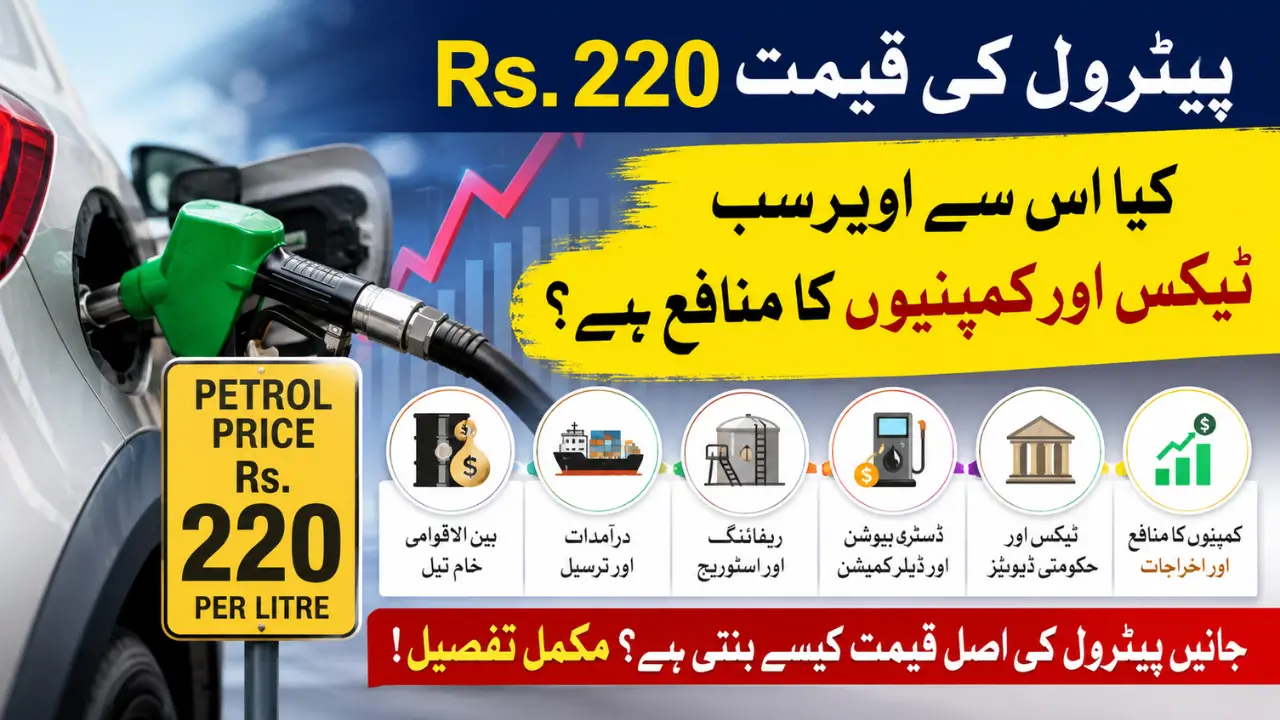
Petrol Price Is Rs 220 – Is Everything Above It Taxes and OMC Profits?
Petrol Price often spark debate, especially when petrol reaches around Rs. 220 per litre. Many people assume that every rupee above this amount is simply made up of government taxes and Oil Marketing Company (OMC) profits. However, the reality is more complex. Understanding how petrol prices are calculated helps consumers see where their money actually goes and why prices can change over time.
What Makes Up the Price of Petrol?
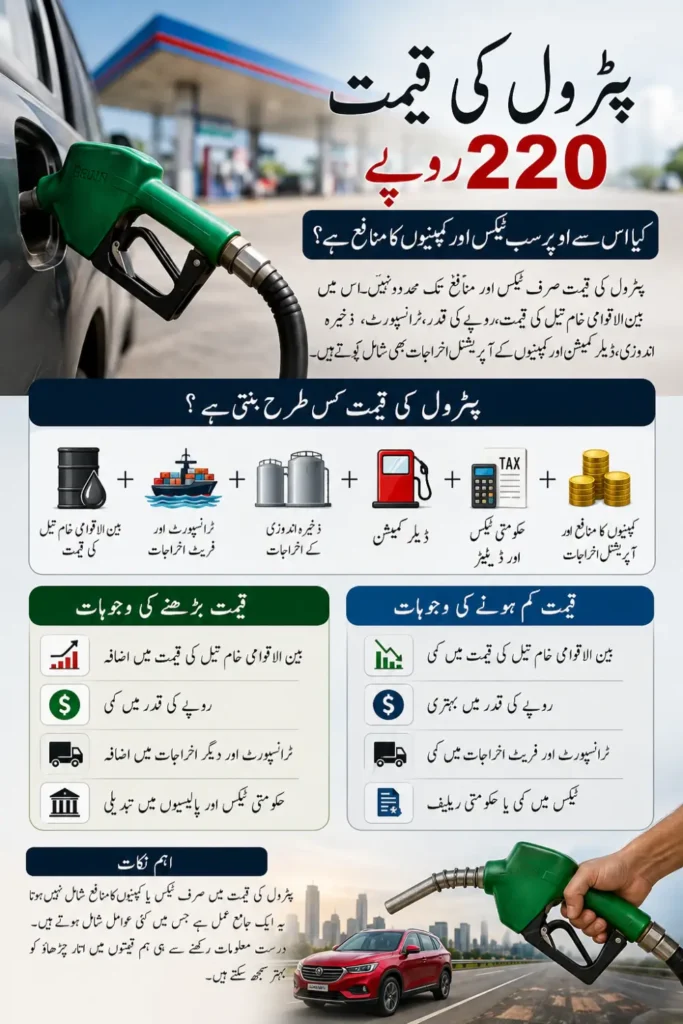
The retail price of petrol is made up of several components rather than a single cost. The starting point is the international price of crude oil or refined petrol, depending on how the country sources its fuel. After that, transportation, storage, refining, distribution, government taxes, dealer commissions, and OMC margins are added before the fuel reaches petrol stations.

Because these factors change regularly, the final retail price also changes.
You Can Also Read : Maryam Nawaz Unveils Free Land Scheme

Are Taxes the Biggest Part of the Price?
Taxes are an important part of petrol pricing, but they are not the only reason the retail price increases. Governments may impose different types of taxes or duties to generate revenue and support public spending. The exact amount varies depending on national policies and economic conditions.
Even when taxes are significant, they do not account for every rupee above a specific price level. Exchange rate movements, international oil prices, and supply chain costs also influence the final amount paid by consumers.

What Role Do Oil Marketing Companies Play?
Oil Marketing Companies are responsible for purchasing, transporting, storing, and distributing fuel across the country. They also maintain infrastructure such as storage facilities and fuel stations.
Their profit margin is only one part of the overall price. OMCs also incur operational costs that include logistics, employee salaries, maintenance, safety standards, and inventory management. These expenses are necessary to ensure fuel remains available throughout the country.In addition, petrol station dealers receive a separate commission for selling fuel to consumers.
Factors That Can Increase Petrol Prices
Several economic factors influence petrol prices beyond taxes and company profits.
- International crude oil prices can rise due to global supply and demand.
- Exchange rate fluctuations can increase import costs if the local currency weakens.
- Transportation, storage, and distribution expenses may grow because of higher operating costs.
These factors often have a direct impact on the final retail price seen at fuel stations.
You Can Also Read : Phase 3 Green Tractor Program
Why Petrol Prices Change Frequently
Fuel prices are not fixed forever. Governments and regulatory authorities may review prices periodically based on changes in global energy markets, currency values, and domestic economic conditions.
If crude oil becomes cheaper internationally or the local currency strengthens, petrol prices may fall. On the other hand, higher import costs or increased taxes can push prices upward.
This explains why petrol prices can change even when demand within the country remains stable.
Is Every Rupee Above Rs. 220 Taxes and OMC Profits?
The simple answer is no. While taxes and OMC margins contribute to the final price, they represent only part of the overall cost. The retail price includes multiple elements that work together, including international fuel costs, exchange rates, transportation, storage, dealer commissions, and operational expenses.
Looking at only taxes or company profits gives an incomplete picture of how petrol pricing actually works. Understanding all the components helps consumers better interpret fuel price announcements and market changes.
Final Thoughts
When petrol is priced at Rs. 220 per litre, it is inaccurate to assume that everything above this level consists only of taxes and OMC profits. Fuel pricing is influenced by a combination of global market conditions, government policies, import costs, logistics, and business operations. A balanced understanding of these factors allows consumers to make informed opinions rather than relying on common misconceptions.
FAQs
What determines the retail price of petrol?
The retail price includes fuel import costs, taxes, transportation, storage, dealer commissions, and OMC margins.
Do Oil Marketing Companies keep the entire extra amount as profit?
No. OMCs have operating expenses, and only a portion of the price represents their profit margin.
Why do petrol prices change regularly?
They change because of international oil prices, exchange rates, government policies, and supply chain costs.




Are taxes the only reason petrol is expensive?
No. Taxes are one factor, but global fuel prices and operational costs also affect the final retail price.
Can petrol prices decrease in the future?
Yes. Prices may fall if international oil prices decline, exchange rates improve, or government policies reduce overall fuel costs.