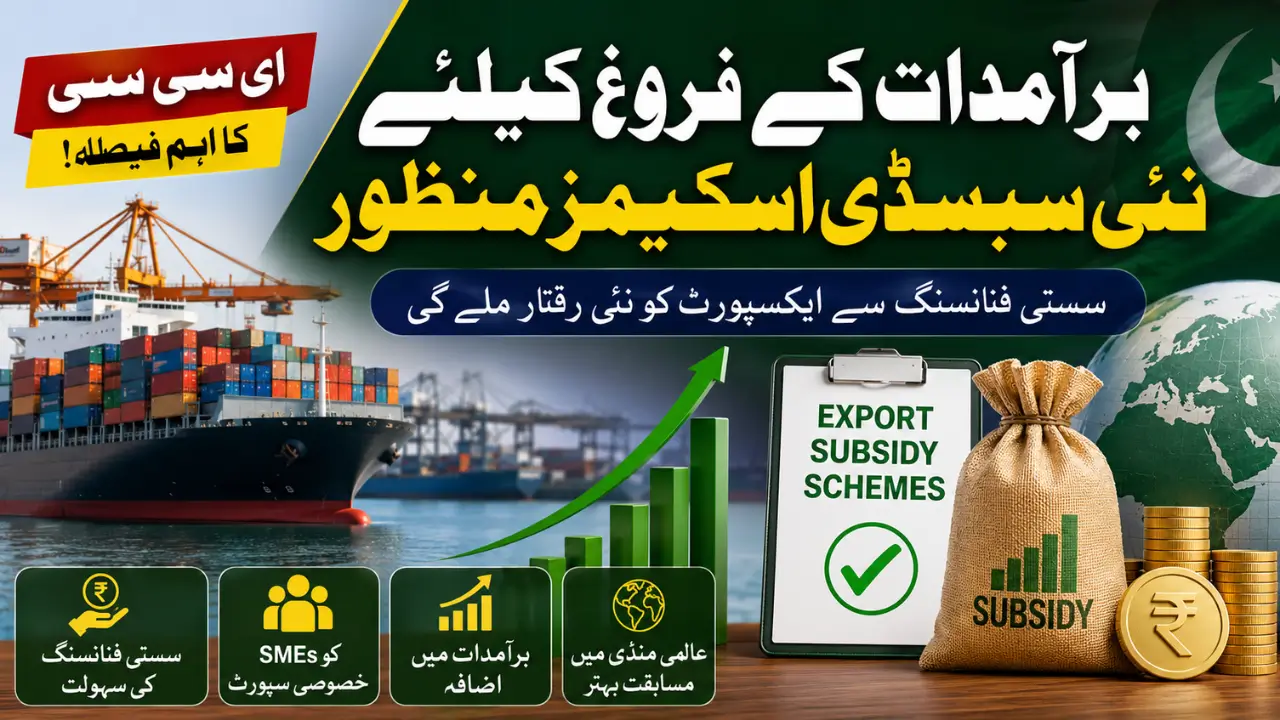
ECC Approves New Export Subsidy Schemes to Boost Pakistan’s Exports
Pakistan has taken another step to strengthen its export sector by introducing new export subsidy schemes designed to improve access to affordable financing. The latest initiatives aim to support exporters, encourage higher export volumes, and create better opportunities for small and medium-sized enterprises (SMEs).
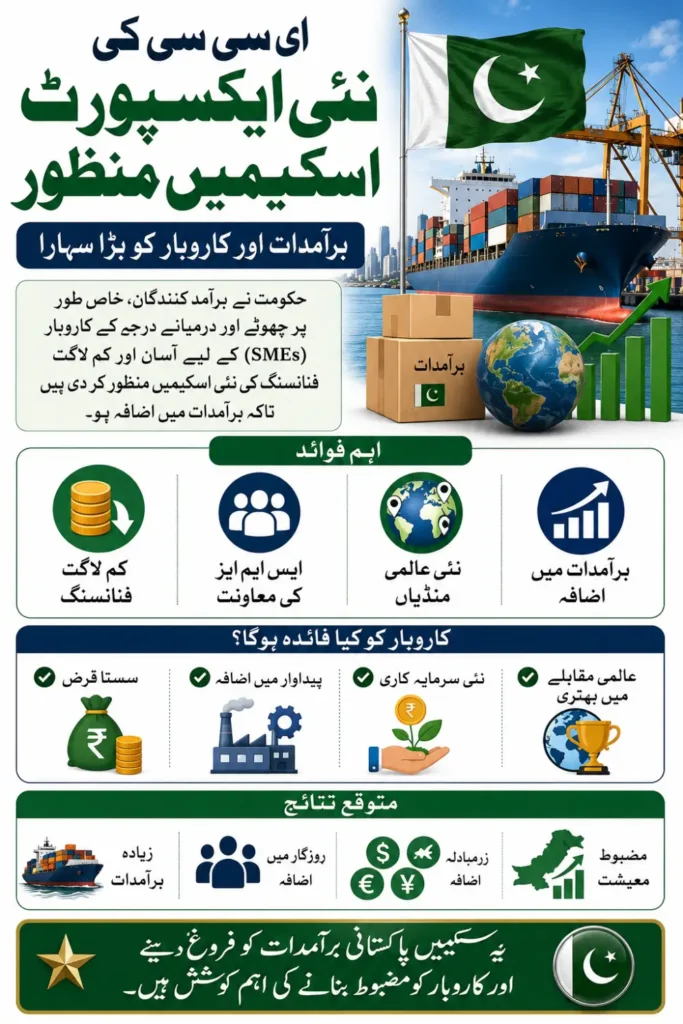
With global competition increasing, affordable financial support can help businesses expand production, improve product quality, and enter new international markets. These schemes are expected to make export financing more accessible while encouraging long-term economic growth.

Why the New Export Subsidy Schemes Matter
Export businesses often require working capital to purchase raw materials, upgrade equipment, and fulfil international orders. High financing costs can make it difficult for many companies, especially SMEs, to compete in global markets.
The newly approved export subsidy schemes are intended to reduce these financial barriers by offering more affordable financing options. This approach can help exporters focus on expanding their business instead of worrying about expensive borrowing costs.

You Can Also Read : Petrol Price Is Rs 220
Key Objectives of the New Export Finance Package
The government’s latest export finance package has several important goals. It aims to increase Pakistan’s export earnings while improving financial support for businesses involved in international trade.

The main objectives include making financing easier to obtain, encouraging investment in export-oriented industries, and helping businesses improve their competitiveness. These efforts may also contribute to job creation and stronger industrial growth over time.
- Provide affordable financing for exporters and export-related businesses.
- Increase financial access for small and medium-sized enterprises (SMEs).
- Encourage long-term export growth and improve international competitiveness.
How Exporters Can Benefit
Lower financing costs allow exporters to invest more confidently in their operations. Businesses can use affordable funding to improve manufacturing processes, purchase modern equipment, or expand production capacity.
Companies may also find it easier to explore new export markets without facing excessive financial pressure. Improved access to capital supports business growth while helping exporters meet international demand more efficiently.
You Can Also Read : Punjab Safe Cities Launches 24/7 Online Complaint Tracking System
For SMEs, these schemes could be especially valuable because smaller businesses often face greater challenges when applying for commercial financing. Easier access to funding may help them compete with larger exporters.
Focus on Small and Medium-Sized Enterprises
SMEs play a major role in Pakistan’s economy by creating employment and supporting local industries. However, limited financial resources often prevent many small businesses from expanding beyond domestic markets.
The new subsidy schemes place special attention on improving financing opportunities for SMEs. Better access to affordable credit can encourage innovation, improve product quality, and help smaller businesses become successful exporters.
As SMEs grow, they can contribute more significantly to national exports while creating additional employment opportunities across different sectors.
Expected Impact on Pakistan’s Export Sector
Affordable export financing has the potential to strengthen Pakistan’s position in international trade. Businesses with lower financing costs can price their products more competitively and invest in improving quality standards.
Higher export activity may also encourage investment across manufacturing, agriculture, textiles, information technology, and other export-focused industries. Over time, stronger export performance can support economic stability and increase foreign exchange earnings.
Although the long-term success of these schemes will depend on effective implementation, regular performance reviews can help ensure the programmes deliver meaningful results for exporters.
What Businesses Should Do Next
Exporters should stay informed about eligibility requirements and application procedures once the schemes become fully operational. Businesses should also review their financing needs and identify areas where affordable funding can support future growth.
Preparing accurate financial records, maintaining compliance with export regulations, and developing long-term business strategies can improve the chances of benefiting from these financing opportunities.
Companies that plan carefully and invest wisely may be better positioned to expand into new markets and increase their export potential.
Conclusion
The approval of new export subsidy schemes represents an important effort to strengthen Pakistan’s export sector through affordable financing and greater support for SMEs. By reducing financial challenges and encouraging long-term investment, these initiatives can help exporters improve competitiveness and explore new business opportunities.
If implemented effectively, the schemes may contribute to higher exports, stronger industrial development, and sustainable economic growth while providing businesses with the financial confidence needed to compete in global markets.
FAQs
What are the new export subsidy schemes?
They are financing initiatives designed to provide affordable financial support for exporters and export-related businesses.
Who can benefit from these schemes?
Exporters, export-oriented businesses, and especially small and medium-sized enterprises (SMEs) are expected to benefit.
Why are affordable export finance schemes important?
They reduce financing costs, helping businesses invest, expand production, and compete more effectively in global markets.
How can SMEs benefit from the new initiatives?
SMEs may gain improved access to low-cost financing, making it easier to grow operations and enter international markets.




What is the expected outcome of these schemes?
The initiatives aim to increase exports, strengthen business competitiveness, support economic growth, and encourage long-term investment.