Punjab Government Officially Launches Health Profiling Program For All School Students In 2026
Punjab Government Officially Launches Health Profiling Program
The Punjab School Education Department has officially launched a comprehensive health profiling initiative for all school students in 2026. This program aims to assess the health and wellness of students across the province, identify potential health challenges, and provide targeted support to ensure both physical well-being and improved academic performance. By combining health monitoring with educational strategies, the government is taking a significant step toward creating a healthier learning environment for students.
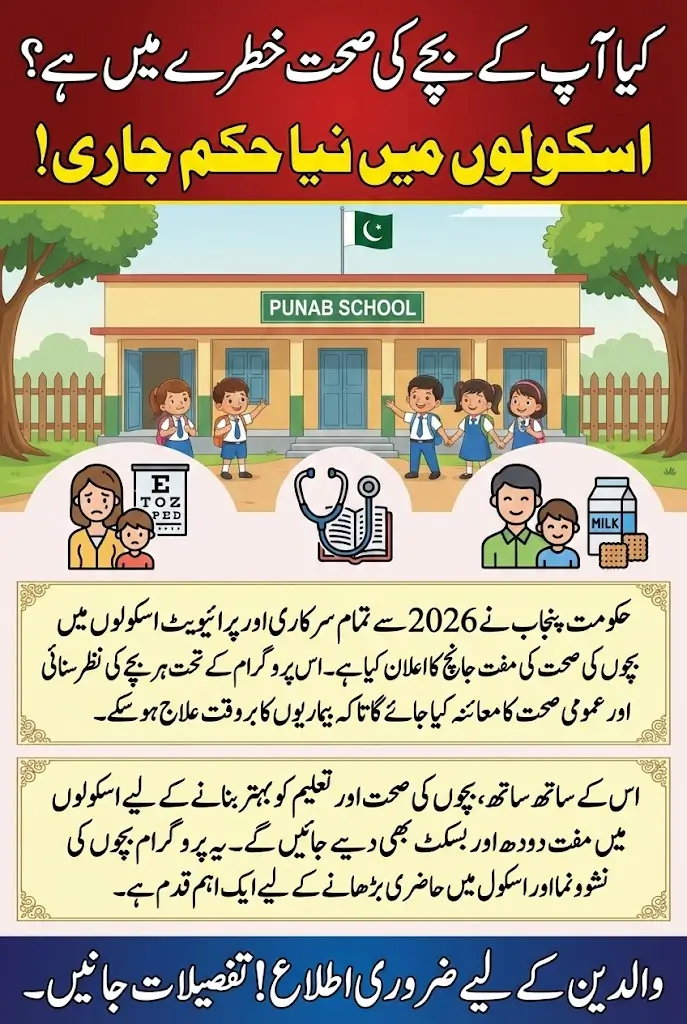
This initiative reflects the provincial government’s commitment to the holistic development of children. By gathering detailed health data and providing tailored interventions, schools can now address health concerns early, reduce absenteeism, and enhance learning outcomes. The program also complements other government initiatives, such as providing nutritious food in schools, to ensure children grow up healthy and academically capable.

Overview of Punjab’s Health Profiling Initiative
The health profiling program covers all school students across Punjab, including both public and private institutions. The initiative focuses on identifying minor, moderate, and severe health issues, ranging from vision and hearing problems to mobility challenges. By documenting each student’s health status, the department can develop personalized interventions that cater to individual needs.
Through this program, schools are expected to provide early detection and continuous monitoring of health problems. Teachers, healthcare professionals, and school administrators are working together to ensure that students receive timely medical support and appropriate accommodations in classrooms. This approach emphasizes preventive care and promotes an inclusive learning environment for children with special needs.

Health Issues Identified Among Students
Preliminary surveys have revealed the scale and types of health issues faced by students. These findings will guide the allocation of resources and help schools provide targeted support.
- Minor health issues affect approximately 258,000 students
- Moderate problems affect around 37,000 students
- Severe health difficulties impact 8,500 students
Vision-related issues are also being addressed with urgency, as poor eyesight can significantly affect learning. Hearing and mobility challenges have been documented to ensure children receive proper assistance.

Key statistics include:
- Vision issues: 32,500 students mildly, 2,560 moderately, 2,349 severely
- Hearing problems: 21,000 students mildly, 21 moderately, 1,341 severely
- Mobility challenges: 16,000 students mildly, 2,061 moderately, 1,232 severely
This data highlights the importance of targeted interventions and the need for a systematic health monitoring process.
Special Facilities for Students With Additional Needs
The education department has emphasized providing special facilities and resources for students with additional requirements. These facilities aim to ensure that every student has the opportunity to succeed academically, regardless of their health condition.
- Implementing inclusive classrooms for students with disabilities
- Providing assistive devices and medical support where needed
- Offering personalized learning strategies for students with health challenges
- Regular monitoring and follow-up for early detection of health issues
By focusing on inclusivity, the department ensures that no student is left behind due to health concerns.
Nutritional Support in Schools
As part of the health profiling initiative, schools are also distributing free milk and biscuits to students. This effort addresses nutritional deficiencies and supports healthy growth. By combining nutrition with regular health assessments, schools aim to improve both physical and cognitive development among students.
Nutritional support programs provide:
- Daily milk distribution to enhance calcium intake
- Healthy snacks to supplement students’ diets
- Awareness campaigns for students and parents about balanced nutrition
These measures not only promote better health but also encourage regular school attendance and active participation in academic and extracurricular activities.
Student Health Status by Severity
| Health Issue | Minor | Moderate | Severe |
|---|---|---|---|
| General Health Problems | 258,000 | 37,000 | 8,500 |
| Vision Problems | 32,500 | 2,560 | 2,349 |
| Hearing Issues | 21,000 | 21 | 1,341 |
| Mobility Challenges | 16,000 | 2,061 | 1,232 |
This table provides a clear snapshot of the health challenges faced by students, helping policymakers and schools prioritize interventions.
Implementation and Follow-Up
Once the health profiles are completed, each student will receive individual care and necessary medical support. Schools are expected to coordinate with healthcare providers to ensure follow-up treatment, regular check-ups, and ongoing monitoring.
Teachers will play a critical role in implementing care strategies, tracking progress, and adjusting learning plans to accommodate students’ health needs. This collaborative approach ensures that children not only receive treatment but also benefit academically from the support provided.
Importance of Comprehensive Health Profiling
This initiative marks a significant advancement in the education sector, emphasizing the connection between health and academic success. By systematically assessing students’ health, Punjab is setting a precedent for evidence-based educational policies that prioritize child well-being.
The benefits of comprehensive health profiling include:
- Early identification of health problems for timely intervention
- Improved academic performance due to better physical and mental health
- Enhanced inclusivity for students with special needs
- Reduced absenteeism and improved school participation
- Awareness among parents and students about health and nutrition
These outcomes demonstrate how health profiling can positively impact both learning and overall child development.
Final Words
The Punjab Government’s health profiling initiative for 2026 is a proactive measure to ensure that every student receives the care and support they need. By integrating health assessments, nutritional support, and inclusive education, schools are equipped to create an environment conducive to learning and growth.
This program reflects the government’s dedication to child welfare and sets a model for other provinces to follow. With continued monitoring and support, the initiative promises healthier, happier, and more academically successful students across Punjab.
FAQs
What is the purpose of Punjab’s student health profiling initiative?
The program aims to assess health, provide necessary support, and improve academic outcomes for students across the province.
Which health issues are being monitored in schools?
Vision, hearing, mobility, and general health problems are the primary areas of focus.
How will schools provide support to students with health challenges?
Special facilities, assistive devices, personalized learning strategies, and medical care will be provided.





Are students receiving nutritional support through this initiative?
Yes, schools are distributing free milk and biscuits to improve overall student health.
What are the expected benefits of this program?
The initiative promotes early detection of health problems, better academic performance, and inclusive education for all students.