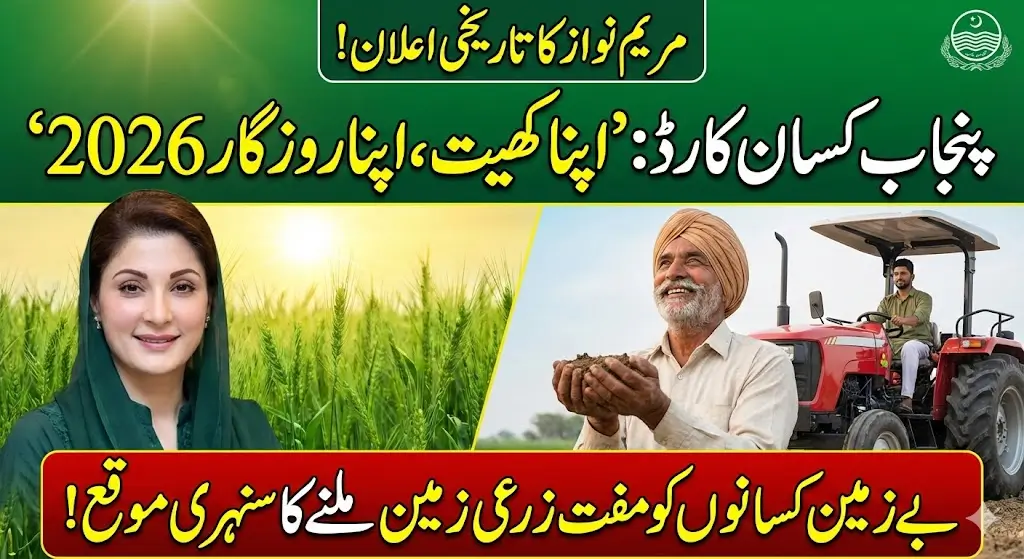
Maryam Nawaz Unveils Free Land Scheme for Punjab Farmers Apna Khet Apna Rozgar 2026
Punjab Farmers Apna Khet Apna Rozgar 2026
The announcement of the Punjab Farmers Apna Khet Apna Rozgar 2026 initiative by Maryam Nawaz has sparked widespread discussion across rural communities in Punjab. The program is being seen as a transformative step aimed at empowering landless cultivators and strengthening the agricultural backbone of the province. By focusing on direct land allocation, the initiative intends to create self-reliance among farming families who have long struggled with limited resources and unstable income opportunities.

This agricultural land distribution plan is designed to provide structured access to farmland under a transparent framework. Instead of short-term subsidies, the model emphasizes long-term ownership or secure usage rights so that beneficiaries can build sustainable livelihoods. The approach reflects a shift from traditional relief measures toward development-driven rural empowerment.

| Program Feature | Key Details |
|---|---|
| Initiative Name | Apna Khet Apna Rozgar 2026 |
| Target Audience | Landless farmers, rural youth, and widows in Punjab |
| Primary Objective | Provide free or subsidized agricultural land for long-term ownership |
| Expected Benefits | Poverty reduction, stable income, and enhanced food security |
| Application Process | Transparent digital registration and verification portal |
Apna Khet Apna Rozgar 2026 Vision for Rural Economic Growth
Apna Khet Apna Rozgar 2026 is built around the concept of inclusive agricultural growth. The scheme highlights the importance of supporting small-scale farmers who form a significant portion of Punjab’s rural population. By giving access to cultivable land, the government aims to reduce unemployment in villages and promote productive engagement in farming activities.
The broader vision extends beyond land ownership. The rural employment initiative is expected to encourage modern farming practices, better crop management, and efficient land utilization. With proper planning and monitoring, the project could contribute to food security and enhance the province’s overall agricultural output.
Key Objectives of Apna Khet Apna Rozgar Program
- Provide free or subsidized agricultural land to landless farmers
- Promote self-employment in rural areas through farming opportunities
- Reduce poverty by enabling stable income generation
- Strengthen food production capacity within Punjab
- Encourage transparent beneficiary selection through digital systems
Eligibility Criteria and Beneficiary Selection Process
The success of any public welfare program depends on fair eligibility standards. Under the Punjab farming support scheme, priority is expected to be given to deserving individuals who do not already own agricultural property. Special consideration may be extended to widows, small farmers, and youth seeking agricultural employment.
The selection process is likely to incorporate modern verification methods to ensure transparency. Digital registration platforms and documented screening mechanisms can help minimize irregularities. By introducing an organized scrutiny system, the authorities aim to ensure that land allocation reaches genuinely deserving applicants.

Expected Benefits for Punjab Farmers in 2026
- Increased agricultural employment opportunities
- Stable source of income for landless families
- Improved crop productivity through secure land access
- Enhanced rural economic activity
- Better integration of small farmers into formal agriculture networks
Rural Development Strategy Through Land Allocation
Land remains one of the most valuable assets in agricultural economies. Through this farmland assistance program, the provincial leadership appears committed to bridging the gap between landowners and tenant farmers. Providing direct access to agricultural plots can create a stable foundation for long-term rural development.
Beyond economic gains, land security also strengthens social stability. When families have ownership or legal rights to cultivate land, they are more likely to invest in soil improvement, irrigation facilities, and crop diversification. This long-term perspective can transform underutilized land into productive agricultural zones.
Digital Registration and Transparent Distribution Framework
A modern agricultural reform policy requires technology-driven management. The Apna Khet Apna Rozgar 2026 plan is expected to use digital portals for applications and tracking. Online registration systems can simplify the process and reduce the need for physical visits to government offices.
Transparency is another crucial component. By maintaining digital records of applications, land allotments, and beneficiary data, authorities can enhance public trust. This structured distribution framework supports accountability and allows for easier monitoring of progress across different districts of Punjab.
How Apna Khet Apna Rozgar 2026 Can Transform Rural Punjab
- Encourages inclusive land reforms for sustainable development
- Supports marginalized communities through agricultural access
- Boosts village-level economic stability
- Reduces urban migration by creating local opportunities
- Promotes long-term agricultural resilience
Impact on Agricultural Productivity and Food Security
Punjab is widely recognized as the agricultural heartland of Pakistan. Strengthening its farming sector through strategic land reforms could significantly influence national food supply chains. When small cultivators gain access to farmland, overall crop production has the potential to increase.
The free land initiative also aligns with broader goals of agricultural modernization. Access to land encourages farmers to adopt improved seeds, better irrigation techniques, and efficient harvesting methods. Over time, these improvements may contribute to sustainable food production and reduced dependency on imports.
Empowering Youth Through Agriculture Entrepreneurship
One of the most promising aspects of the Apna Khet Apna Rozgar initiative is its potential to attract young individuals toward farming. In recent years, many rural youth have migrated to cities due to limited employment options. By providing agricultural land and encouraging agri-based entrepreneurship, the scheme could reverse this trend.
Youth empowerment through farming opens doors to innovation. With proper training and access to markets, young farmers can explore organic cultivation, high-value crops, and agri-tech solutions. This diversification can make agriculture more profitable and appealing to the next generation.
Implementation Challenges and Monitoring Mechanism
Large-scale land allocation programs often face administrative challenges. Accurate land identification, fair distribution, and prevention of misuse require strong oversight mechanisms. Effective monitoring will be essential to ensure that the allocated land remains productive and is not transferred illegally.
The government may need to establish district-level committees or digital audit systems to track progress. Regular evaluation reports and public updates can further strengthen the credibility of the scheme. A proactive monitoring approach will be crucial for achieving long-term success.





Conclusion
Apna Khet Apna Rozgar 2026 program represents more than just a land distribution effort. It signals a broader commitment to agricultural transformation in Punjab. If implemented efficiently, the initiative can lay the foundation for a more equitable and productive rural economy.
Looking ahead, continued policy support, training programs, and infrastructure development will determine the long-term impact of this scheme. By combining land access with modern agricultural practices and transparent governance, Punjab has the opportunity to set a benchmark for rural empowerment initiatives across Pakistan.