Government Expands Islamabad Electric Bus Service With New Route to Rawat In 2026 — Know Full Details
Government Expands Islamabad Electric Bus Service
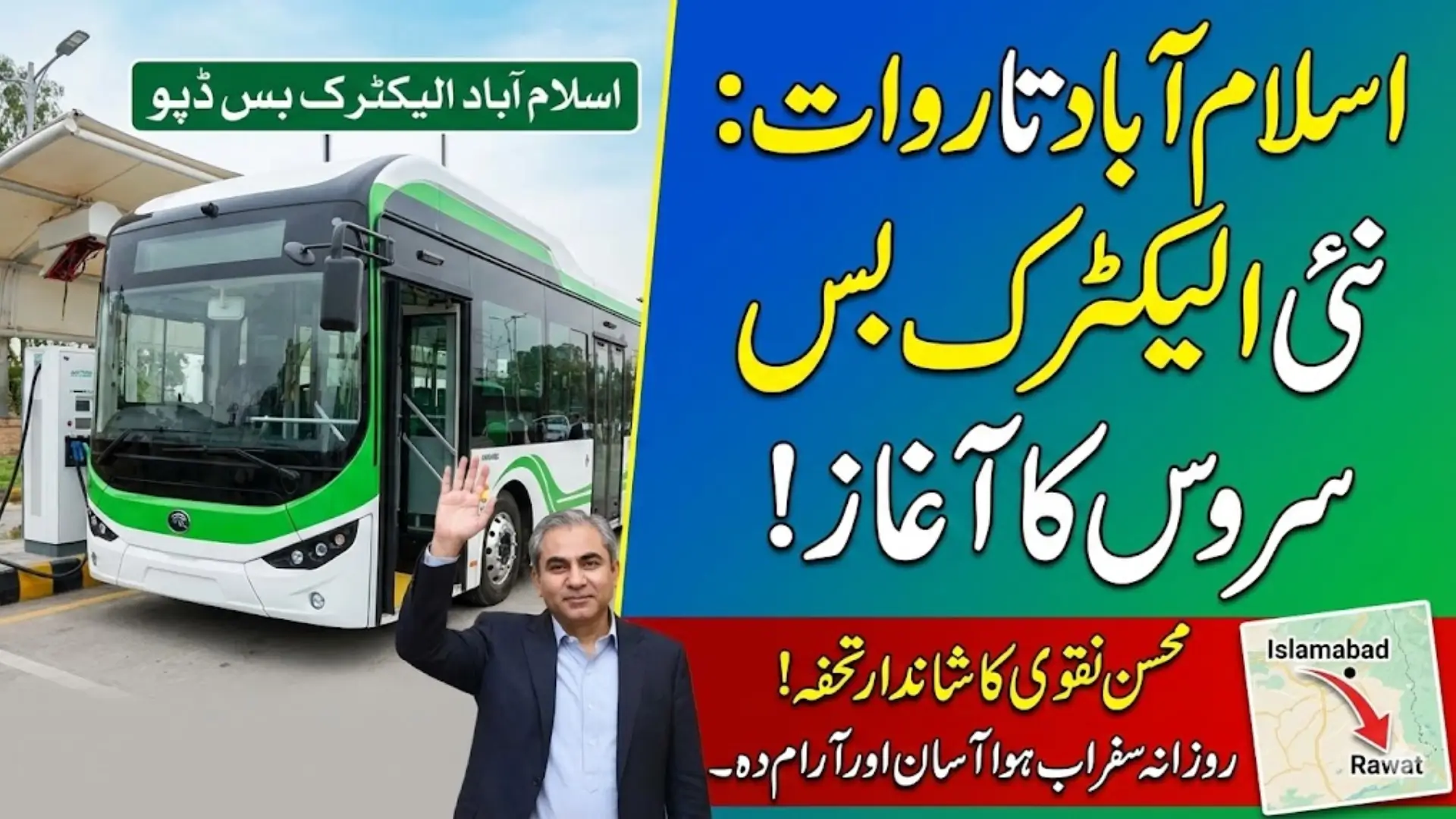
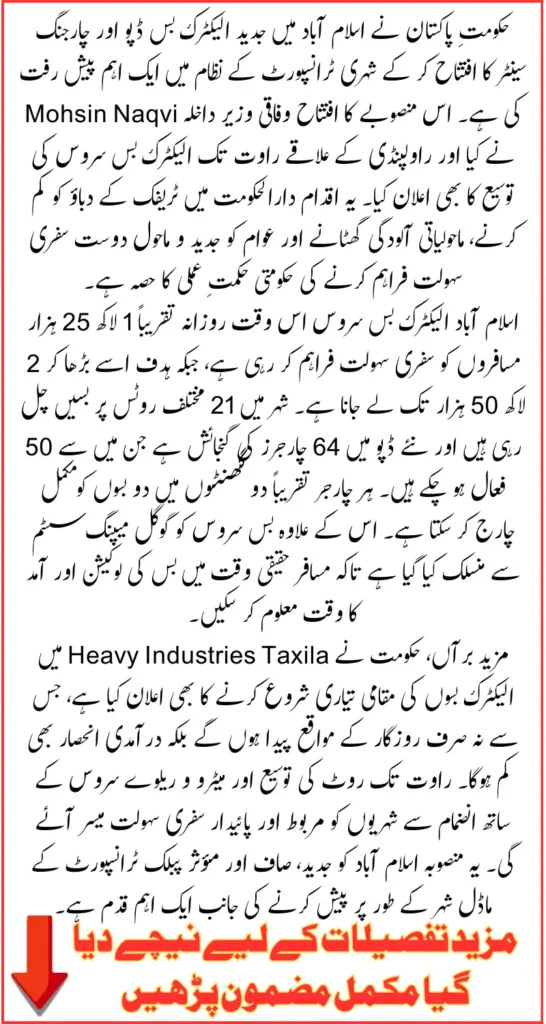
The Government of Pakistan has taken a significant step to improve urban transportation in Islamabad by inaugurating a new electric bus depot and charging center. Interior Minister Mohsin Naqvi officially launched the facility and announced the expansion of the electric bus service to Rawat. The project is part of the government’s ongoing efforts to modernize public transport, reduce traffic congestion, and promote environmentally friendly solutions in the capital city.
The inauguration ceremony also included a demonstration ride on one of the electric buses, attended by relevant officials. Minister Naqvi praised the team for their efforts in completing the project and highlighted the importance of reliable and efficient public transport for the growing population of Islamabad and its surrounding areas. He emphasized that the service expansion is designed to meet the commuting needs of students, working professionals, and daily travelers alike, while promoting sustainable urban mobility.

Overview of the Islamabad Electric Bus Service
The Islamabad electric bus service has quickly become a key part of the city’s transportation network.
| Feature | Details |
|---|---|
| Daily Ridership | Currently 125,000, Target 250,000 |
| Routes | 21 operating routes across Islamabad |
| Depot Capacity | 64 chargers (50 installed, 14 pending) |
| Charging Time | 2 buses per charger in approx. 2 hours |
| Expansion | New route to Rawat |
| Technology Integration | Google mapping for real-time bus tracking |
| Future Plans | Local manufacturing of electric buses at HIT Taxila |
This initiative is aligned with broader efforts to reduce air pollution and traffic congestion in Islamabad. By offering a reliable and cost-effective alternative to traditional buses, the electric bus system provides commuters with a safer, cleaner, and more comfortable travel experience.

Expansion to Rawat and Service Improvement
The new route to Rawat marks a major milestone in the expansion of Islamabad’s electric bus network. This route has been planned to accommodate the commuting patterns of daily travelers and students, ensuring convenient connectivity between Rawat and central Islamabad. The introduction of this route is expected to significantly ease traffic on major highways, reduce travel time, and provide a sustainable transport option for long-distance daily commuters.
Minister Mohsin Naqvi emphasized that the expansion is part of a larger strategy to integrate multiple public transport systems, including metro and railway services. The restoration of the Rawalpindi–Islamabad railway service further complements the electric bus initiative, offering commuters alternative modes of travel and reducing the overall burden on city roads.

Electric Bus Depot and Charging Center
The newly inaugurated depot in Islamabad is equipped with modern facilities to ensure the efficient operation of the electric bus fleet. The depot has the capacity to accommodate 64 chargers, of which 50 are already installed, and the remaining 14 will be operational shortly. Each charger can fully charge two buses within approximately two hours, ensuring that the fleet remains operational throughout the day.
The depot also provides space for maintenance and monitoring, allowing for timely inspections and repairs. Advanced tracking and operational software ensure that buses are deployed efficiently across different routes, minimizing downtime and maximizing service reliability. The integration with Google route mapping allows commuters to plan their journeys with real-time updates and expected travel times.
Features and Benefits of the Electric Bus Service
The Islamabad electric bus system offers multiple advantages to both commuters and the environment. The service is designed to be efficient, safe, and eco-friendly, while also providing cost savings to passengers and reducing traffic congestion.
- Reduced air pollution due to zero-emission electric buses
- Lower operating costs compared to traditional diesel buses
- Integration with metro and railway services for seamless travel
- Specially planned routes for students and daily commuters
- Reliable and timely service with advanced tracking systems
The electric bus service is not only a transportation solution but also an investment in sustainable urban development. By expanding the network to Rawat and other areas, the government is creating a model for clean and efficient public transport in Pakistan.
Local Manufacturing and Future Developments
In addition to expanding routes and upgrading facilities, the government has announced plans to start local manufacturing of electric buses at Heavy Industries Taxila (HIT). This initiative will create employment opportunities, promote local industry, and reduce dependency on imported vehicles.
The move to manufacture electric buses domestically is expected to support the government’s long-term goals of sustainable urban transport and environmental conservation. As production scales up, it will allow for faster fleet expansion and improved maintenance support within the country
Conclusion
The expansion of Islamabad’s electric bus service, including the new Rawat route, represents a significant step forward in improving public transport. With modern depots, advanced charging infrastructure, and a focus on commuter needs, the initiative is transforming urban mobility in the capital. The integration of technology, environmentally friendly vehicles, and safety measures makes this a model project for other cities to follow.
The government’s efforts, including the future local manufacturing of electric buses at HIT Taxila, highlight a commitment to sustainable transport and economic growth. By continuing to expand the network, improve facilities, and integrate services with metro and railway systems, Islamabad is setting a benchmark for efficient and eco-friendly public transportation in Pakistan.
FAQs
What is the new route added to Islamabad’s electric bus network?
The electric bus service has been expanded to include a new route connecting Islamabad with Rawat to serve long-distance commuters.
How many passengers currently use the electric buses daily?
Approximately 125,000 commuters use the electric bus service daily, with a target to increase to 250,000.
How long does it take to charge a bus at the depot?
Each charger can charge two buses in about two hours, ensuring operational efficiency.




Are the buses integrated with any technology for tracking?
Yes, the electric bus routes have been integrated with Google for real-time tracking and schedule updates.
Will electric buses be manufactured locally in Pakistan?
Yes, Heavy Industries Taxila (HIT) will begin local manufacturing of electric buses to support expansion and reduce import dependency.