Lahore Board Launches Centralized E-Marking System For Class 9 Practical Exams 2026 – Know Full Detail
E-Marking System For Class 9 Practical Exams 2026
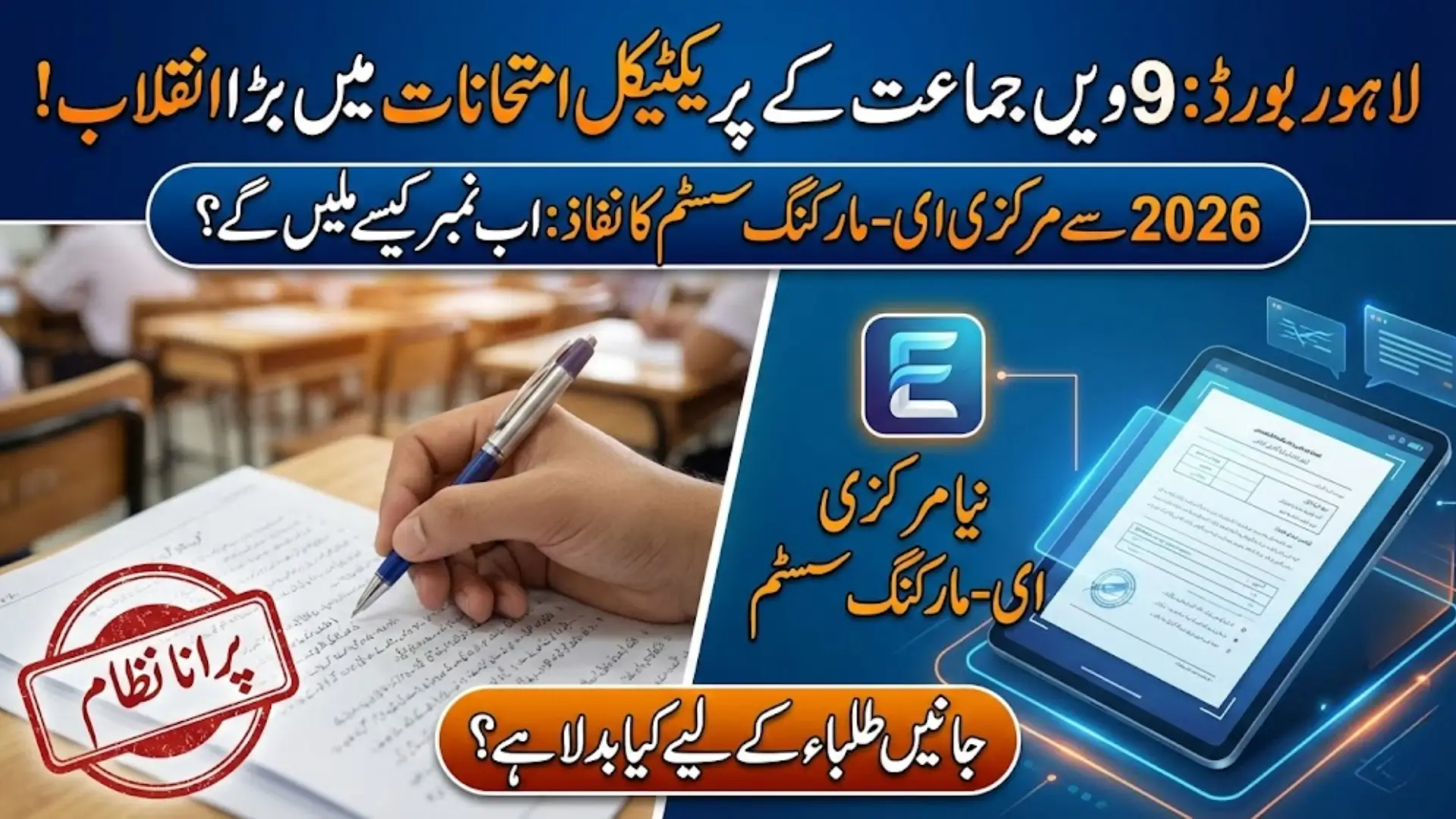
E-Marking System For Class 9 Practical Exams 2026: The Board of Intermediate and Secondary Education Lahore has officially introduced a centralized e-marking system for Class 9 practical examinations starting from 2026. This major reform aims to improve transparency, reduce irregularities, and modernize the examination structure across the board. The decision marks a significant shift from the traditional marking system where practical examiners had full control over assigning marks.
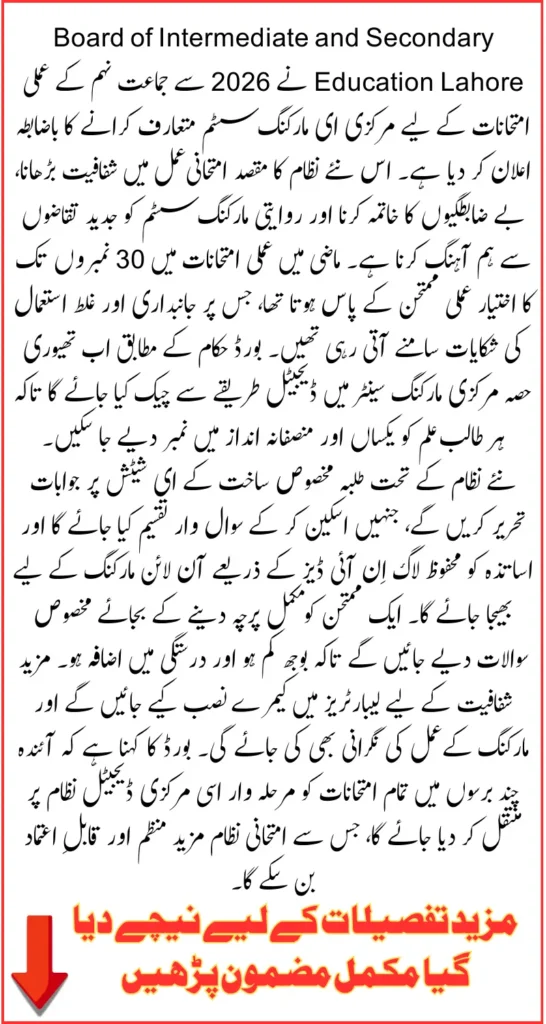
According to board officials, the new digital marking system has been introduced after receiving multiple complaints about mismanagement and unfair marking during practical exams. By centralizing the process and using technology-based evaluation, the Lahore Board plans to ensure fairness, accountability, and improved accuracy in the assessment of students.

Why Lahore Board Introduced the E-Marking System
The move toward centralized e-marking did not happen suddenly. For years, concerns were raised regarding the discretionary powers given to practical examiners. Previously, examiners were responsible for awarding up to 30 practical marks, which created opportunities for favoritism and misuse.
Secretary of the board, Rizwan Nazeer, explained that several complaints were received about inconsistencies in practical marking. To address these concerns, the board decided to eliminate the old manual assessment method and replace it with a controlled digital system. The reform follows directives from Punjab Education Minister Rana Sikandar Hayat and Chairman Muzammil Mahmood, who emphasized the need for transparency in examinations.

What Changes in Class 9 Practical Exams 2026
Under the new policy, the theory portion included within practical papers will no longer be marked solely by the practical examiner present in the laboratory. Instead, the answer sheets will be sent to a centralized marking center where they will be assessed digitally.
This means that practical examiners will not have independent authority to award marks without oversight. The centralized system ensures that every student’s paper is evaluated under standardized guidelines, reducing variations in marking patterns.

How the Centralized E-Marking System Will Work
The new marking method introduces specially designed answer sheets known as E-sheets. These sheets are structured with fixed spaces for each question, making scanning and digital distribution easier.
- Students will write their answers on structured E-sheets during practical exams
- After submission, answer sheets will be scanned at the board’s centralized marking center
- The scanned papers will be digitally divided question-wise
- Examiners will receive secure login credentials
- Teachers will assess assigned questions remotely from home
- The system will distribute specific questions instead of full papers
- Real-time monitoring will ensure transparency
This process eliminates the need for examiners to physically visit marking centers, saving time and reducing administrative workload.
Distribution of Questions Instead of Full Papers
One of the most important features of the new system is workload distribution. Previously, a single examiner was assigned around 100 complete answer sheets, increasing pressure and chances of error.
- Examiners will mark only specific questions
- They may receive 10, 20, or 50 responses of a single question
- Multiple examiners may assess different questions from the same paper
- This division improves focus and accuracy
- The marking burden is distributed evenly
This method ensures that no single examiner controls an entire paper, which increases fairness in the evaluation process.
Surveillance and Monitoring for Transparency
To further strengthen the system, the Lahore Board will install surveillance cameras in practical laboratories. This step aims to prevent any misconduct during practical examinations.
Additionally:
- The digital marking system will be monitored in real time
- Examiner activity will be supervised through camera-based oversight
- Login credentials will be secure and personalized
- Any suspicious activity can be traced immediately
These measures are designed to create a transparent and accountable examination environment for students.
Expansion of E-Marking to Other Examinations
The centralized e-marking system will not be limited to Class 9 practical exams. The board has confirmed that the first annual ICS examination paper across Punjab will also be evaluated through the digital marking system.
- All examinations are expected to shift to centralized e-marking
- Manual checking will gradually be phased out
- Digital evaluation will become standard practice
- Examination records will be stored electronically
This long-term plan shows the board’s commitment to modernizing the education system.
Benefits of the Centralized E-Marking System
The introduction of digital marking brings multiple advantages for students, teachers, and the examination board.
- Increased transparency in marking
- Reduction in favoritism and irregularities
- Balanced workload for examiners
- Faster result processing
- Improved marking accuracy
- Secure digital record keeping
- Real-time monitoring for accountability
These improvements aim to rebuild trust in the examination process and ensure that students receive marks purely based on merit.
Impact on Students and Teachers
For students, the new system promises fair evaluation and equal treatment. Marks will be awarded according to standardized criteria, minimizing human bias. For teachers, the system reduces physical travel to marking centers and provides flexibility through remote assessment. However, strict monitoring ensures that examiners follow guidelines carefully.
Although the shift to digital marking may require initial training and adaptation, it represents a positive transformation toward a more transparent education system.
Implementation Timeline
The centralized e-marking system will officially begin with Class 9 practical examinations in 2026. The ICS annual examination will also follow the same digital evaluation model.
Over the next few years, the Lahore Board plans to fully transition all examination assessments to the centralized e-marking platform. This gradual implementation ensures smooth adoption without disrupting the academic calendar.
Final Words
The launch of the centralized e-marking system for Class 9 practical exams in 2026 marks a historic reform in the Lahore Board’s examination structure. By replacing manual assessment with digital evaluation, the board aims to eliminate irregularities and improve transparency.




With structured E-sheets, remote marking, camera monitoring, and workload distribution, the new system represents a modern and accountable approach to student assessment. If implemented effectively, this reform could set a model for other educational boards across the country to follow.
(Source: Propakistani)